
Construction Costs Risen – What to Do? Counteract in Six Steps
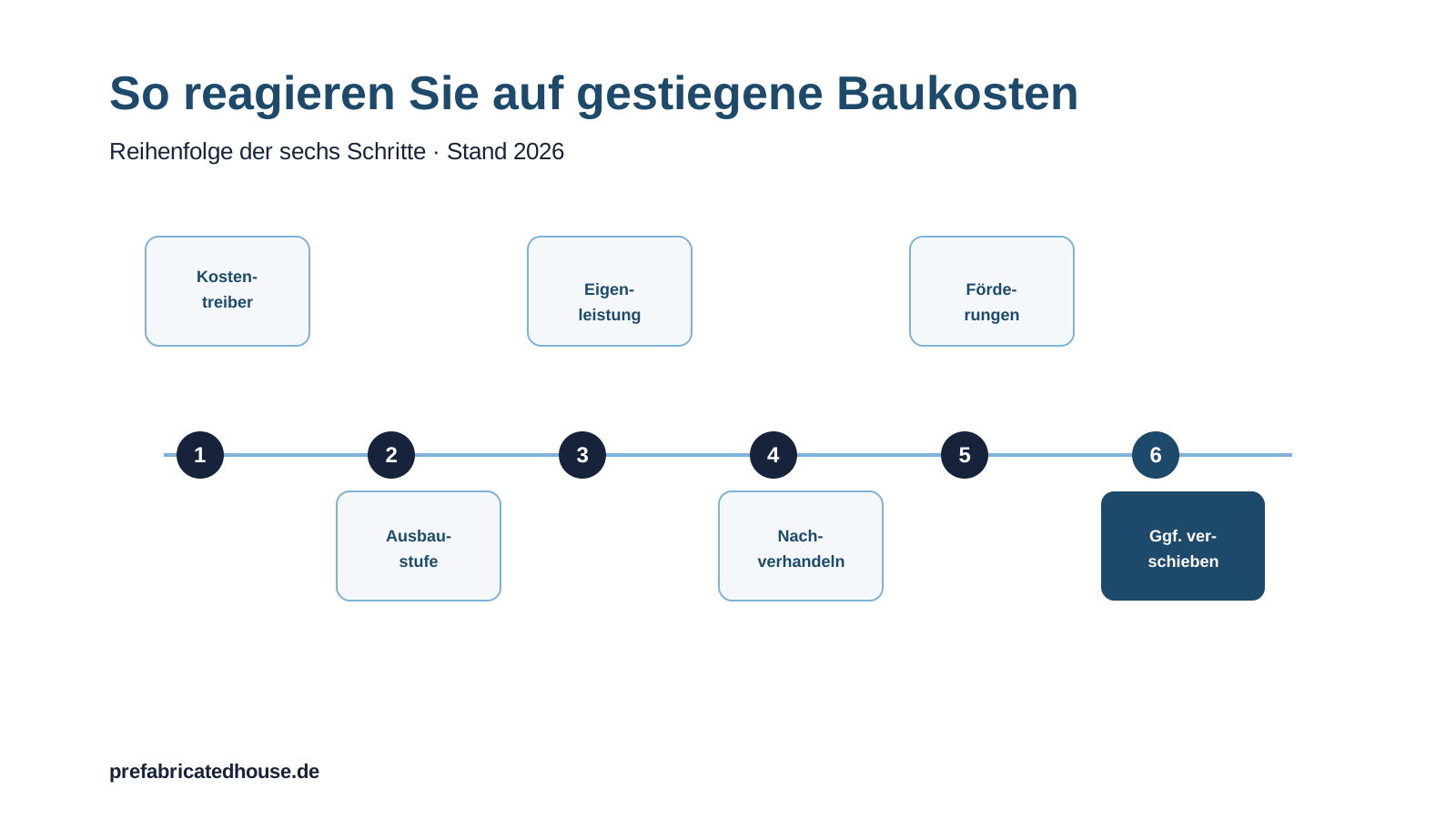
If construction costs shoot beyond the budget, the project need not fail. Usually you can counteract with cost analysis, an adjusted finishing stage, own work, renegotiation and funding. This guide shows in six steps how to react – from the cost driver to the emergency solution of postponing.
When construction costs shoot beyond the calculated budget, the project does not have to fail. In most cases you can counteract with a combination of cost analysis, an adjusted finishing stage, sweat equity, renegotiation and funding. This guide shows in six steps how to react — from the cost driver to the last-resort solution of postponing.
Short answer: If the construction costs have risen, proceed in this order: analyse the cost drivers, choose a cheaper finishing stage, plan in sweat equity, renegotiate with providers and the bank, exhaust funding and — if nothing else helps — postpone the project. Usually a combination of the first four steps already brings the calculation back into balance.
Step 1: Which cost drivers can be identified?
Short answer: First get an overview: compare the quote, supplementary orders (Nachträge) and ongoing invoices with the original assumptions. Usually the biggest drivers hide in the cellar, specification, outdoor facilities and supplementary orders. Only once you know where the money is flowing can you save in a targeted way and without loss of substance.
How supplementary orders and additional costs arise and how to counteract them is explained by the guide supplementary orders and additional costs. An overview of the total costs is provided by the guide house-building costs.
Step 2: Is switching the finishing stage worthwhile?
Short answer: A switch from the turnkey house to the shell-completion or kit house lowers the price noticeably, because you take on trades yourself. Anyone who does interior finishing, painting or floor laying themselves saves labour costs — but must bring time and craft skill for it. The finishing stage is one of the biggest levers in the budget.
Finishing stages and savings potential (orientation, as of 2026)
| Finishing stage | What the provider does | Saving effect for builders |
|---|---|---|
| Turnkey | completely ready to move in | no own effort, highest price |
| Services-ready | finished except floor/painting | moderate saving |
| Shell-completion house | shell + building envelope | high savings potential with sweat equity |
| Kit house | material and instructions | greatest saving, a lot of own work |
The differences are explained by the guides finishing stages and shell-completion house or turnkey.
Compare the prices of several providers
The fastest lever against risen costs is comparison. Request quotes free and without obligation and check where you can build more cheaply.
Step 3: How much does sweat equity really achieve?
Short answer: Sweat equity — the so-called muscle mortgage (Muskelhypothek) — lowers the construction costs because you save labour costs. Realistic are painting, floor coverings, garden landscaping and clean-up work. Calculate honestly with your time and skill; trades such as electrics or plumbing should be taken on by professionals. The bank partly recognises sweat equity as a substitute for equity.
What is important is not to overestimate sweat equity. Anyone who builds alongside their job often underestimates the time involved and the follow-up costs of mistakes. Only budget for trades you confidently master, and plan in time buffers so that the sweat equity does not endanger the move-in date and thereby prolong the double burden of rent and instalment. As a rule of thumb: the closer a trade is to statics, building envelope or building services, the more it belongs in professional hands — painting, floors and garden, by contrast, are well doable even for laypeople.
How much is realistically possible is shown by the guide sweat equity in house building.
Step 4: How do I renegotiate with the provider and the bank?
Short answer: Talk openly with the construction company about alternatives for material and specification and have supplementary orders justified in writing. With the bank you can examine a repayment adjustment, a longer interest-rate fixation or a top-up. Anyone who has several quotes in hand negotiates from a stronger position.
- Have supplementary orders justified in writing and traceably.
- Have cheaper, equivalent material alternatives offered.
- Discuss repayment amount, interest-rate fixation or a top-up with the bank.
- Use several comparison quotes as a negotiating basis.
Step 5: Which funding cushions the costs?
Short answer: Low-interest KfW loans, state programmes and — for families — special programmes lower the financing burden. The prerequisite is usually an energy-efficient new build and an application before construction starts. Even one interest-reduced loan component relieves the monthly instalment noticeably.
Funding has a double effect: it lowers the interest burden and thereby creates room in the monthly instalment that is otherwise missing for risen costs elsewhere. So consistently check whether your new build reaches an efficiency level that enables an interest-reduced KfW loan, and whether your federal state offers supplementary programmes. Families with children should additionally check the home-ownership programme for families. Since almost all programmes require the application before construction starts, it is worthwhile coordinating this step as early as possible with the financing bank.
Current programmes are bundled by the guides funding and KfW funding 2026; suitable state funds can be found via the funding finder.
Step 6: When is postponing the wiser choice?
Short answer: If analysis, finishing stage, sweat equity, renegotiation and funding are not enough, a deferral is wiser than an overstretched financing. Use the time to save more equity, slim down the project or wait for cheaper framework conditions. A viable budget is more important than a fast construction start.
No financing on the edge
An instalment that already tips over at small income dips endangers the whole project. Better to postpone and finance soundly than to overextend yourself. The basics are offered by the guide construction financing 2026.
Conclusion: systematically against risen construction costs
Risen construction costs are no reason to panic: anyone who knows the drivers, adjusts the finishing stage, brings in sweat equity, renegotiates and uses funding usually gains enough room. If the gap remains too big, a deferral is the more sensible solution. You best check your budget concretely by working out the prefab house costs and comparing them with the current prefab house prices 2026. Neutral market data on construction prices is published by the Federal Statistical Office.
Build more cheaply through comparison
Compare quotes from several providers, free and without obligation, and find the best value for money for your budget.
What does your dream house really cost?
Request suitable quotes from vetted manufacturers for free and compare the prices per square metre for your construction project.
Compare house prices now