
Buy & have a solar system installed: photovoltaics, storage, balcony power plant
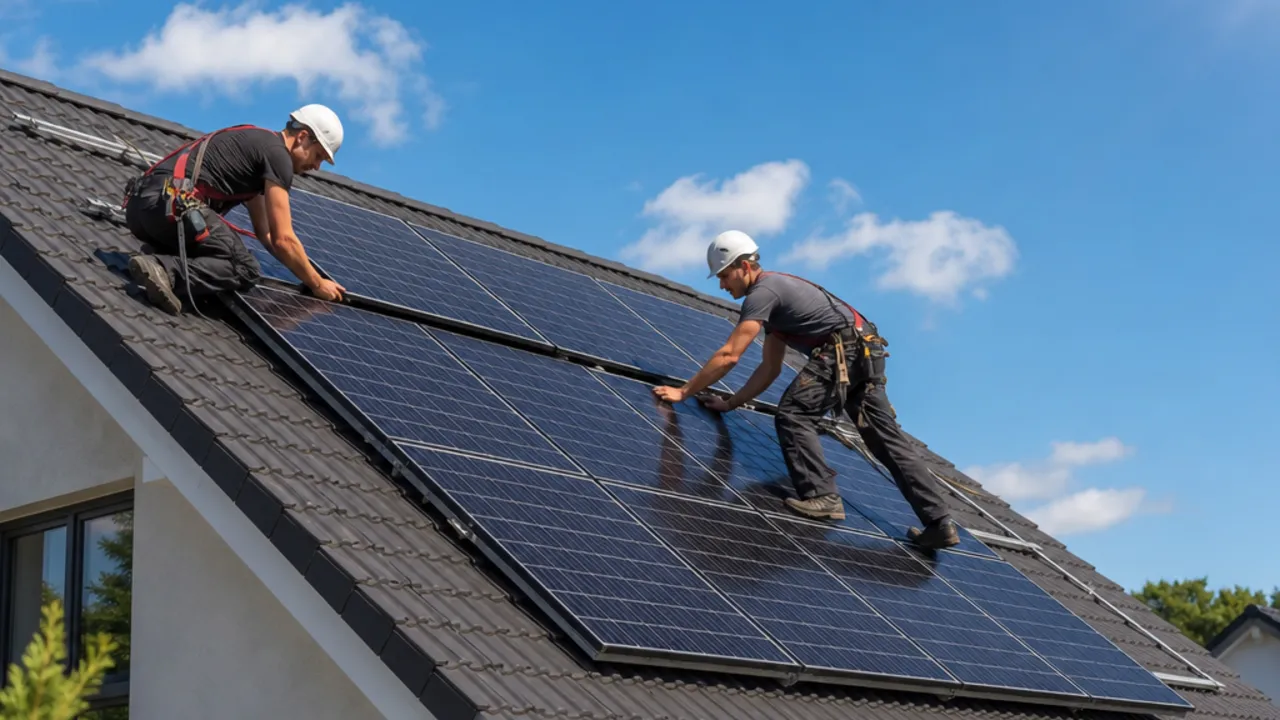
Roof PV, a solar system with storage, a balcony power plant with storage or solar thermal? We compare all the options, list the photovoltaic costs for 2026 including inverter and battery storage — and get you free quotes from a specialist firm. Planning a new build? Then fit your prefabricated house with photovoltaics straight from the factory.
From 8 cents per kWh
Your own solar power costs just a fraction of the 35 – 40 cent grid price.
0% VAT
On the purchase and installation of PV systems up to 30 kWp — plus a tax-free feed-in tariff.
60 – 80% self-consumption
With battery storage you use your solar power in the evening and at night too.
Balcony power plant from €300
Plug-in solar for tenants: feed in up to 800 watts, installed without an electrician.
Photovoltaics, solar thermal or a balcony power plant — which is right for you?
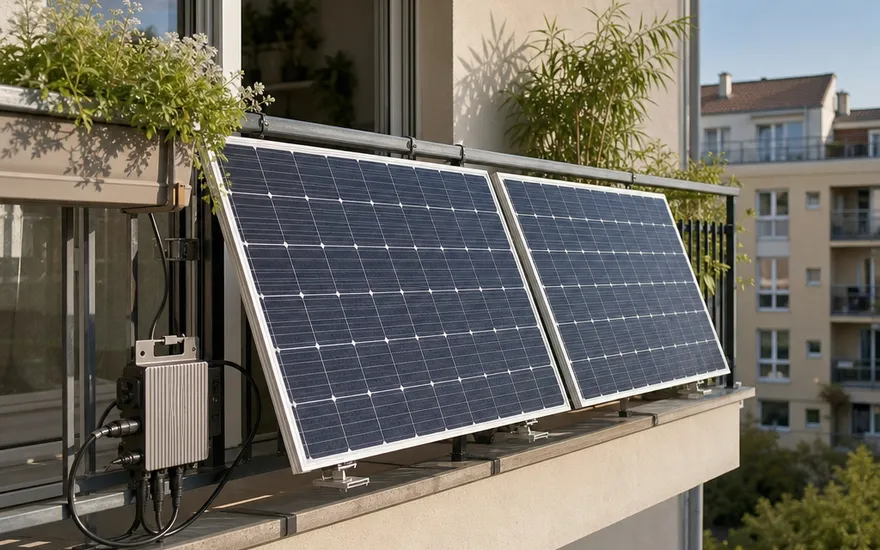
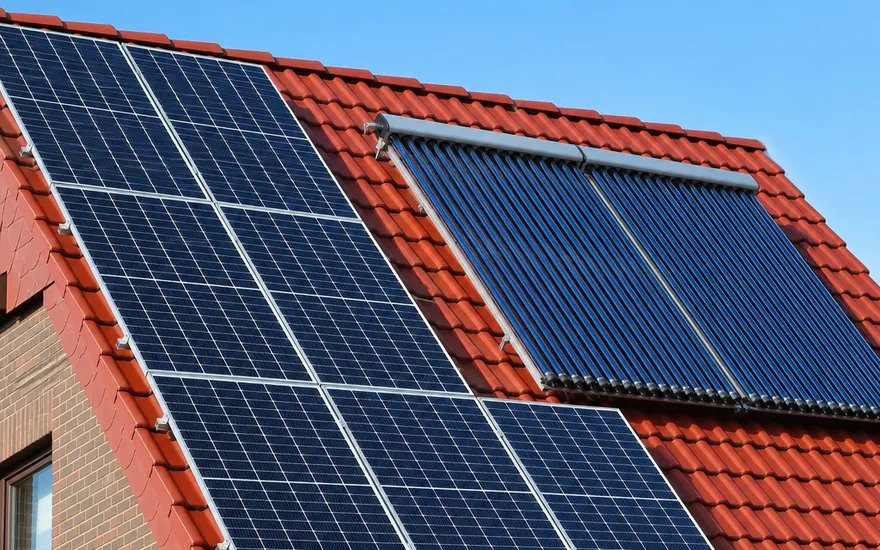
Rising energy costs make solar systems as popular in 2026 as rarely before — but not all "solar" is the same. A photovoltaic system (PV system) converts sunlight into electricity: PV modules on the roof, an inverter in the basement and, if needed, battery storage. Solar thermal collectors, by contrast, deliver heat for hot water and heating. The balcony power plant — also called a plug-in or balcony solar system — is the mini PV system for tenants: two solar panels on the railing, a micro-inverter, a socket — and it is up and running.
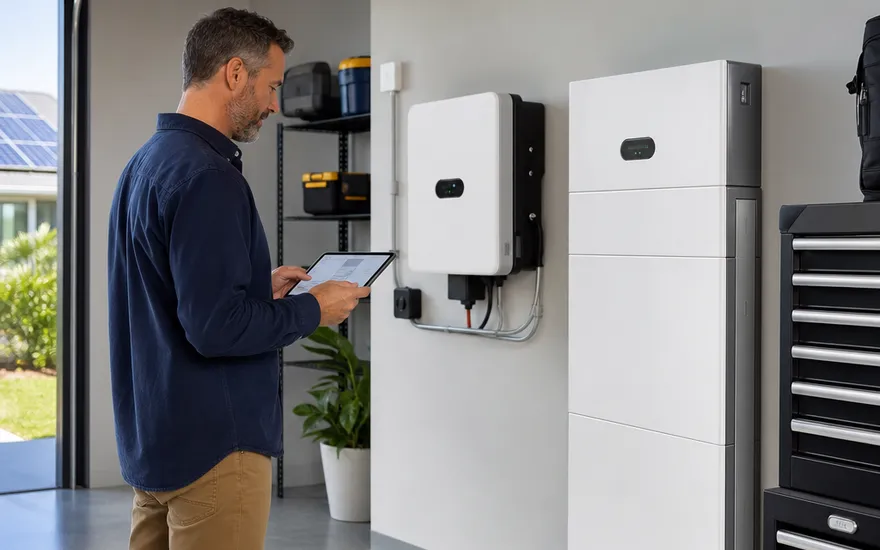
Among homeowners, the PV system with storage is the most frequently chosen option in 2026: without storage you use only around 30 percent of your own solar power yourself, while with an 8- to 12-kWh battery self-consumption rises to 60 to 80 percent. Together with a wallbox and a heat pump, the roof turns into a power plant that also supplies the car and the heating. Tenants start with a balcony power plant — if needed with storage that shifts the solar power into the evening.
Rule of thumb for sizing: 1 kWp of photovoltaics per 1,000 kWh of annual consumption, plus a reserve for an EV and a heat pump. Around 5 to 6 m² of roof area are needed per kWp — modern glass-glass modules achieve strong yields even on east-west roofs.
Solar systems compared: PV system, storage, balcony power plant & solar thermal
| System type | Suitable for | Costs 2026 | Yield / benefit | Note |
|---|---|---|---|---|
| Photovoltaic system (PV system, roof) | Detached house, semi-detached house — on your own roof | €10,000 – €18,000 (8 – 12 kWp, with installation) | 8,000 – 12,000 kWh of solar power/year | 0% VAT plus feed-in tariff |
| PV system with battery storage | Households with evening/night usage or an EV | €15,000 – €26,000 (with 8 – 12 kWh storage) | Self-consumption climbs from ~30% to 60 – 80% | the most frequently chosen option in 2026 |
| Balcony power plant (plug-in solar) | Rented flat, balcony, terrace or garage | €300 – €800 (up to 2,000 W of modules, 800 W feed-in) | 500 – 900 kWh/year | only simplified MaStR registration, no electrician |
| Balcony power plant with battery | Balcony solar with a power reserve for the evening | €800 – €1,800 | Self-consumption close to 100% | particularly sought-after since 2025 |
| Solar thermal (collectors) | Hot water and heating support | €4,000 – €12,000 | up to 60% of hot-water demand | eligible for BAFA funding, often paired with a heat pump |
Guidance values as of 2026, without guarantee. Prices depend on the region, roof shape, components (modules, inverters e.g. Fronius, SMA, Huawei, Growatt; storage e.g. BYD, sonnen, Sungrow) and installation effort.
Buy & have a solar system installed: free quotes from a specialist firm
Tell us in 3 clicks which solar system you have in mind — we will get you free, no-obligation quotes for photovoltaic systems, PV with storage, balcony power plants and solar thermal.
- Free & non-binding
- SSL-encrypted
- Reply within 24 h
Which solar solution interests you?
Personal reply within 24 hours
Photovoltaic costs 2026: modules, inverter, storage & installation
In recent years the prices for solar systems have fallen noticeably: in 2026 PV modules cost only a fraction of what was due in 2022, and with 0% VAT on photovoltaics the former tax burden falls away entirely. Storage size and installation effort have the greatest effect on the price. Important: registration with the grid operator, the entry in the Market Master Data Register and the installation of the bidirectional meter are part of a good specialist firm's scope of services — ask for them explicitly in the quote.
| Cost item | Price range | Note |
|---|---|---|
| PV modules (e.g. 10 kWp, glass-glass modules) | €3,500 – €6,000 | 0% VAT on purchase and installation for residential buildings |
| Inverter (e.g. Fronius, SMA, Huawei, Growatt) | €1,200 – €2,500 | hybrid inverter as soon as battery storage is planned |
| Battery storage 8 – 12 kWh (e.g. BYD, sonnen, Sungrow) | €4,000 – €8,000 | worthwhile with high evening consumption and an EV |
| Installation, scaffolding, mounting structure | €2,500 – €5,000 | depends on the roof shape, tiles and pitch |
| Meter cabinet conversion & bidirectional meter | €500 – €2,000 | the specialist firm handles the registration with the grid operator |
| Optional: wallbox for the EV | €800 – €2,500 | especially worthwhile with PV surplus charging |
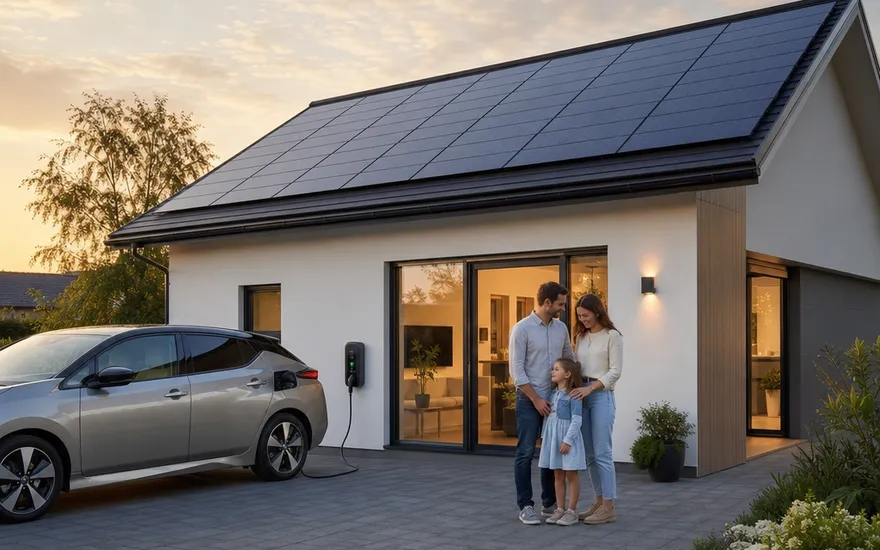
Planning a new build? A prefabricated house with photovoltaics ex works
Nowhere is photovoltaics cheaper than in a new build: the mounting structure is integrated directly into the roof, conduits, meter cabinet and space for storage are provided ex works, the scaffolding is there anyway — and the system flows into the construction financing. Numerous prefabricated house manufacturers offer PV packages with battery storage and a wallbox in 2026; together with a heat pump and an Efficiency House standard, the energy costs of your new home drop to a minimum.
- PV package ex works: no retrofitting costs or scaffolding rental
- Storage and wallbox: solar power for the house and the EV
- With a heat pump: heat and cool with your own electricity
- A higher Efficiency House level = cheaper KfW financing
For this, it is best to compare several prefabricated house manufacturers and calculate your budget including building services with the Cost Calculator. Our overview of Funding 2026 lists which grants and loans are available.
Design a prefabricated house with photovoltaics: compare up to 5 quotes
Planning a new build and want to fit your prefabricated house with a solar system, storage and a wallbox from the start? We will compile free quotes from manufacturers who deliver photovoltaics ex works.
- Free & non-binding
- SSL-encrypted
- Reply within 24 h
Which type of prefab house fits your plans?
Personal reply within 24 hours
Funding, feed-in tariff & payback: is it worth it?
A solar system has rarely been as economical as in 2026: 0% VAT on purchase and installation, a tax-free feed-in tariff for surplus electricity, the favourable KfW programme 270 for photovoltaics and storage — supplemented by regional grants from many municipalities, especially for battery storage and balcony power plants. Anyone who uses their solar power mostly themselves produces the kilowatt hour for 8 to 12 cents, while grid electricity costs 35 to 40 cents. Typical payback periods are 8 to 11 years without storage and 9 to 13 years with storage — with module warranties of 25 to 30 years.
Three tips from practice: first, compare several quotes — the price ranges between specialist firms are considerable. Second, fill the roof as fully as possible rather than sizing the system too tightly: the extra cost per kWp decreases with size, and additional consumers such as an EV or a heat pump are almost always added later. Third, look for complete quotes that include registration, meter replacement and commissioning. Neutral information is provided by the Consumer Advice Centre (Verbraucherzentrale) and the Federal Network Agency (Bundesnetzagentur).
Frequently asked questions about solar systems & photovoltaics
Everything important about PV systems, battery storage, balcony power plants, solar thermal, costs, funding and photovoltaics in a new prefabricated house — as of 2026.
What does a solar system with installation cost in 2026?
Is a PV system with battery storage worthwhile?
What does a balcony power plant deliver — and may I simply plug it in?
A balcony power plant with storage — does it make sense?
What is the difference between photovoltaics and solar thermal?
What funding is available for solar systems in 2026?
How large should my PV system be?
What does photovoltaics cost in a new prefabricated house?
Which brands are common for modules, inverters and battery storage?
How long does installing a solar system take?
More on energy, costs & new builds
KfW 40 house with PV
Efficiency House standard plus a solar system: the savings package for a new build.
Efficiency House levels explained
How insulation, heat pump and PV work together.
Funding 2026
KfW, BAFA and grants for solar, storage and new builds.
Air conditioning: costs & installation
Cool with your own solar power — an ideal combination.
Prices, yields and funding conditions as of 2026, without guarantee. The brands mentioned, such as Fronius, SMA, Huawei, GoodWe, Growatt, BYD, sonnen, Sungrow, E3/DC, Meyer Burger, Trina, Jinko or Aiko, serve only as guidance; no business relationship exists.Prefabricated House operates as an independent comparison portal — we broker non-binding quotes but do not carry out any installations ourselves. Electrical and roofing work belongs in the hands of qualified specialist firms.
