
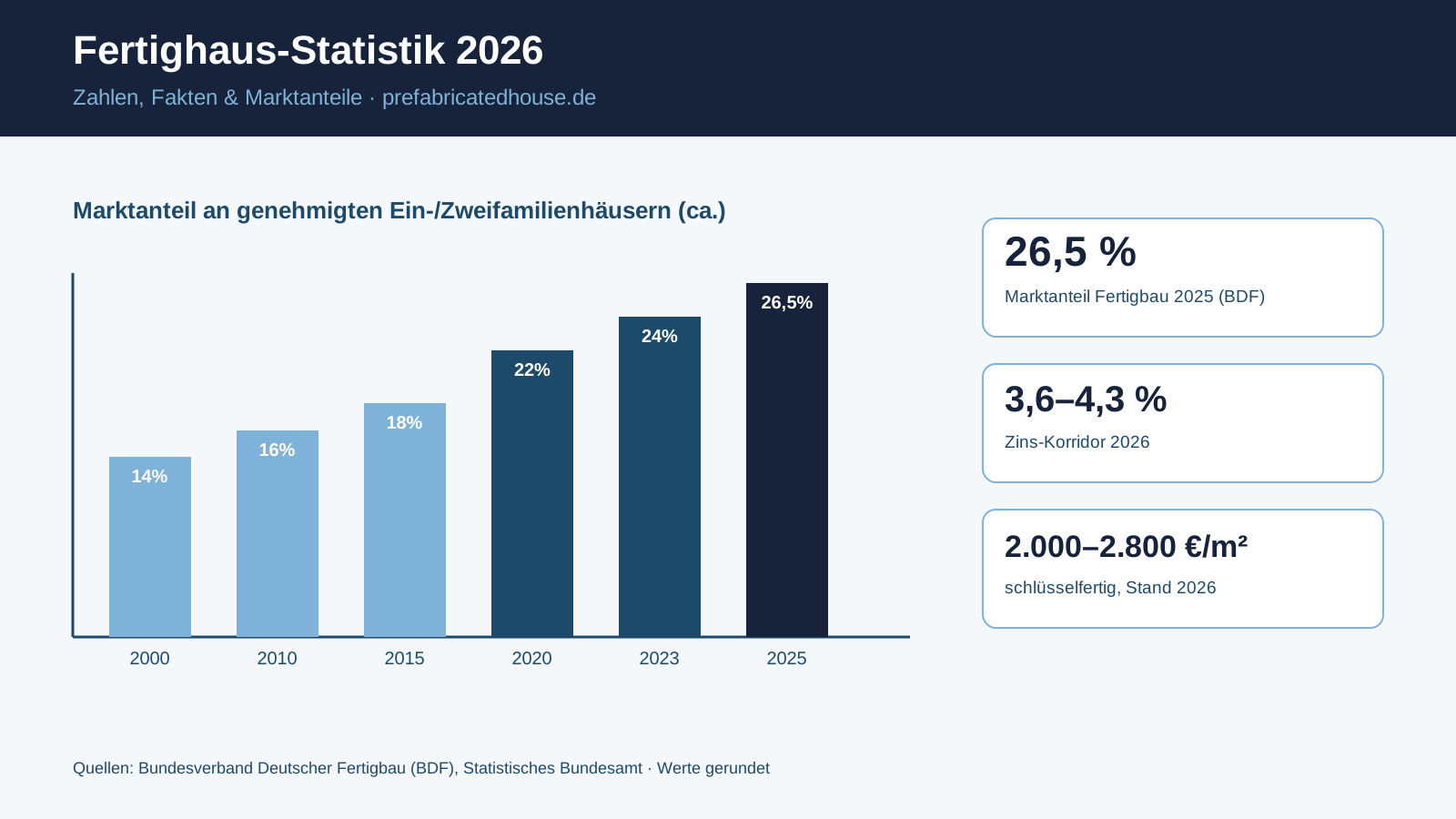
Prefabricated house statistics 2026: the most important figures
Short answer: Around 26.5 percent of the one- and two-family houses approved in 2025 were built as prefabs (source: BDF, 2025) – well over one in four houses. Since 2000 (approx. 13–14%) the share has thus almost doubled. The 2026 price ranges span from the shell house (from approx. €1,300–1,800/m²) via turnkey (approx. €2,000–2,800/m²) to premium (over approx. €3,000/m²). The interest-rate corridor in 2026 is around 3.6–4.3%.
All of the following values are rounded approximations from the annual analyses of the Federal Association of German Prefabricated Building (BDF) and the official construction statistics of the Federal Statistical Office. We mark approximate values with "approx." and give the source and year in each case, so you can classify the figures and reuse them.
Market-share development 2000 → 2025
Prefab has developed from a niche product into a fixed component of one- and two-family house building. The following chart and table show the rounded share of the one-/two-family houses approved in each year (source: BDF).
Prefab market share of approved one-/two-family houses (rounded 'approx.' values, source: BDF).
| Year | Prefab market share (approx.) | Classification |
|---|---|---|
| 2000 | approx. 13–14% | Prefab as a niche in one-/two-family house building |
| 2010 | approx. 15–16% | steady, slow growth |
| 2015 | approx. 17–18% | timber prefab gains acceptance |
| 2020 | approx. 21–22% | for the first time over a fifth of approvals |
| 2023 | approx. 24% | share rises despite declining overall figures |
| 2025 | approx. 26.5% | well over one in four approved one-/two-family houses built as a prefab |
Note: the percentage values are rounded approximations of the annual BDF analysis and serve for trend classification, not as officially exact annual figures.
Building permits: declining trend since 2022
The number of building permits for one- and two-family houses has been noticeably declining since 2022, according to the Federal Statistical Office – above all increased construction and financing costs are slowing new building (qualitative classification). Notably: despite falling overall figures, the prefab share has continued to grow. The construction method therefore remains proportionally in demand, even if less is being built overall.
Why does the share rise despite fewer permits?
Price ranges by segment (as of 2026)
The prices per square metre differ mainly by finishing stage and fit-out. The following values are price ranges for the house body – the plot, foundation slab and ancillary building costs (typically +15–20%) are added on top in each case.
Price ranges by segment, as of 2026 – excluding plot and ancillary building costs.
| Segment | Price range (as of 2026) | Typical scope |
|---|---|---|
| Shell house | from approx. €1,300–1,800/m² | shell/partly fitted out, interior fit-out as self-build work |
| Turnkey (volume to mid-range) | approx. €2,000–2,800/m² | ready to move into, standard to upmarket fit-out |
| Premium / architect house | over approx. €3,000/m² | individual planning, high-quality materials |
You'll find detailed calculations in the house-building costs guide and in the current prefabricated house prices; you can work out your individual final price in the cost calculator.
Regional prevalence & interest-rate corridor 2026
Regional: the south of Germany has traditionally been a prefab stronghold – Baden-Württemberg and Bavaria lead in prevalence, partly because many manufacturers are based there (qualitative classification; exact state-level quotas are published by the Federal Statistical Office and the BDF).
Financing: the interest-rate corridor in 2026 is around 3.6–4.3% for typical construction loans (as of 2026) – a central factor for demand. How this affects the monthly repayment is shown by the construction financing 2026 guide. Regional market data by state can be found in the regions overview.
Prefabricated house explained briefly: definition & costs
What is a prefabricated house?
A prefabricated house is a residential house whose components – usually walls, ceilings and the roof – are prefabricated in the factory, protected from the weather, and then assembled into the house on the building site in a few days. Timber-panel or timber-frame construction is widespread. Prefab reached a market share of around 26.5% of the approved one- and two-family houses in 2025 (source: BDF) – statistically, therefore, well over one in four new houses.
What does a prefabricated house cost in 2026?
In 2026, prices are given as ranges for the house body (as of 2026): turnkey prefabricated houses come in at around €2,000–3,500/m², a shell house starts at approx. €1,300/m², because the interior fit-out is done as self-build work. The specific figure depends on living space, fit-out and energy standard. The plot, foundation slab and ancillary building costs (typically +15–20%) are added on top in each case and are not included in the €/m² values.
The most important pages
For further reading: the prefabricated house overview, the current prefabricated house prices 2026, the option to calculate prefab house costs, the bungalow as a prefabricated house, modular house: prices & providers, the guide buying a prefabricated house as well as comparing prefab house manufacturers and the overview of the multi-family house.
Citing these statistics
You may use the prepared key figures of this page with attribution of the source. Please additionally refer to the original sources (BDF, Federal Statistical Office) and retain the "approx." character of the rounded values.
Citation note
Recommended citation: "Prefabricated house statistics 2026, Prefabricated House – data basis: Federal Association of German Prefabricated Building (BDF) & Federal Statistical Office."
Short URL: Prefabricated House/fertighaus-statistik
Calculate your prefabricated house concretely
Statistics set the frame – your project is decided individually. Request suitable quotes free of charge and compare prices, fit-out and energy standard directly for your region.
